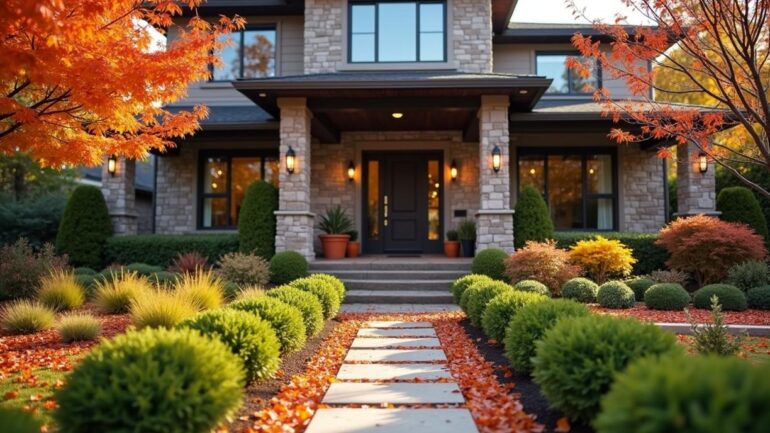
Fall landscaping upgrades can enhance resale value by showing buyers a clean, maintained yard prepared for spring. Autumn is also a practical season for planting in many climates, since cooler air reduces transplant stress while soil often stays warm enough for root development.
Real estate agents often say curb appeal shapes the first showing before buyers reach the front door. The National Association of Realtors’ 2023 Remodeling Impact Report found that standard lawn care service recovered 217% of its estimated cost at resale, while landscape maintenance recovered 104%.
Start With Cleanup Buyers Notice From the Curb
A fall cleanup is not just cosmetic. Wet leaves left on turf for more than a few days can block sunlight, trap moisture, and encourage fungal diseases such as snow mold in cold regions. The University of Minnesota Extension recommends removing heavy leaf cover rather than letting it mat down over grass.
Focus first on the view from the street. Trim shrubs away from windows, rake beds, edge the lawn along sidewalks, and remove dead annuals. Keep shrub branches at least 6 inches off siding to reduce moisture and pest access. If branches touch the roof, cut them back 3 to 5 feet to reduce abrasion and improve inspection access.
This is also the time to remove broken pots, faded plastic edging, and loose landscape fabric. Buyers often read these as signs of deferred maintenance, even when the house itself is sound.
Upgrade the Lawn Before Winter Dormancy
A thick lawn photographs well and makes the property feel larger. In cool-season grass regions, early fall is the best time to seed because soil temperatures remain favorable while weed pressure drops. Penn State Extension notes that late summer is the optimum time to seed cool-season turf, giving seedlings two cool growing seasons to establish.
Aeration is useful when soil is compacted. A simple test is to push a screwdriver into the lawn after watering. If it stops within the top 2 inches, the soil likely needs core aeration. Core plugs should be about 2 to 3 inches deep and spaced 2 to 4 inches apart.
Overseed thin areas right after aeration so seed reaches loosened soil. Keep the seedbed damp, not soaked, for 10 to 21 days depending on grass type. Perennial ryegrass may germinate in 5 to 10 days, while Kentucky bluegrass often takes 14 to 30 days.
When Sod Beats Seed
Sod is better when you need a finished look before listing within 2 to 4 weeks. Seed is better when the listing is 6 to 10 weeks away and the existing lawn has at least 50% healthy grass coverage.
Sod needs firm soil contact and frequent watering for the first two weeks. Do not mow until roots resist gentle lifting, usually after 10 to 14 days in mild fall weather.
Refresh Mulch, But Do Not Overdo It
Fresh mulch makes planting beds look intentional in listing photos. It also moderates soil temperature and reduces winter weed growth. The International Society of Arboriculture recommends keeping mulch 2 to 4 inches deep around trees, not piled against trunks.
Avoid “mulch volcanoes.” Mulch stacked against bark traps moisture and can encourage decay, girdling roots, and rodent damage. Pull mulch 3 to 6 inches away from tree trunks and shrub stems.
Choose shredded hardwood, pine bark, or leaf mold for front beds. Dyed mulch can look harsh in photos, especially against brick or natural stone. If using dyed mulch, choose brown over red or black for broader buyer appeal.
A professional mulch refresh often costs about $75 to $120 per cubic yard installed, so reserve it for front beds, foundation plantings, and the walkway approach if the budget is tight.
Add Structure With Fall-Friendly Plants
Fall planting works well for trees, shrubs, and many perennials because roots continue growing until soil temperatures drop near 40°F. The USDA Plant Hardiness Zone Map helps determine which plants can survive local winter lows, but drainage and wind exposure still matter.
Use plants to frame the house, not hide it. Mature shrubs should sit at least 2 feet from siding for small varieties and 4 to 6 feet away for larger foundation shrubs. Keep plants below windowsills unless they are deliberately used for privacy.
Evergreens are valuable at resale because they hold shape during winter showings. Boxwood, inkberry holly, dwarf spruce, and yew can provide structure in colder zones. In warmer regions, rosemary, wax myrtle, dwarf yaupon holly, and Indian hawthorn are common options.
Best Planting Sizes for Resale Timing
For homes listing within 30 days, use 3-gallon shrubs and larger container perennials because small plants disappear in photos. For homes listing in spring, 1-gallon perennials and smaller shrubs can be practical if planted at proper spacing.
Do not crowd plants to fake maturity. A shrub labeled 4 feet wide should not be planted 18 inches from the next shrub. Crowding looks full for one season, then turns into pruning problems.
Improve Walkways, Edges, and Entry Points
Buyers notice how they move from driveway to door. A cracked, narrow, or poorly lit path can make an otherwise attractive yard feel neglected. A comfortable primary walkway is usually at least 36 inches wide, while 42 to 48 inches allows two people to walk side by side.
Edge definition matters. Steel edging gives crisp lines around gravel or mulch beds. Natural stone works well for cottage and older homes. Concrete pavers fit suburban properties where straight lines match the architecture.
Fix trip hazards before decorative upgrades. A height difference of 1/4 inch or more can be considered a trip concern in many walkway inspections. Lifted pavers, settled stepping stones, and exposed irrigation heads should be corrected before adding plants.
Entry Plantings That Photograph Well
Place the tallest containers or shrubs outside the door swing and away from railings. Symmetry helps formal homes, while staggered containers suit porches and craftsman-style entries.
Use two large planters rather than several small pots. Containers under 12 inches wide dry out quickly and often look cluttered in real estate photos.
Use Lighting Where It Changes Buyer Perception
Landscape lighting helps evening showings and listing photos taken near dusk. The best return usually comes from lighting the route to the entry, house numbers, steps, and one focal tree or architectural feature.
Use warm white fixtures, ideally 2700K to 3000K. Cooler light can make brick, stone, and plants look harsh. Place path lights 6 to 8 feet apart rather than lining both sides like a runway.
Solar lights are easy to install, but they often fade in shaded yards or during short fall days. Low-voltage lighting is more reliable because it uses a transformer and buried cable. A basic front-path low-voltage system with 6 to 8 fixtures often runs $900 to $2,500 installed.
Choose shielded fixtures that direct light downward. The International Dark-Sky Association recommends reducing glare and avoiding unnecessary uplight to limit light pollution.
Decide Which Upgrade Fits Your Listing Situation
The right project depends on listing date, yard condition, and the buyer expectation in your price range. A modest home usually benefits more from neatness and safe access than from elaborate planting. A higher-end home may need layered beds, lighting, and a polished entry to match buyer expectations.
Use this comparison before spending on visible projects.
| Situation | Best upgrade | Why it fits |
|---|---|---|
| Listing in 1 to 3 weeks | Cleanup, mulch, containers, lighting fixes | These changes show immediately in photos and showings |
| Listing in 6 to 10 weeks | Aeration, overseeding, shrub planting | Grass and roots have time to establish before buyers arrive |
| Patchy lawn over 50% bare soil | Sod in front yard only | Seed may not fill fast enough for resale timing |
| Strong house, weak curb appeal | Entry path edging and foundation shrubs | Buyers judge maintenance before they see interior finishes |
| Sloped or wet yard | Drainage correction before planting | Standing water suggests maintenance and foundation concerns |
| Older home with mature trees | Pruning, limb clearance, mulch rings | Tree health and roof clearance matter during inspection |
Drainage should outrank decoration. If water pools within 10 feet of the foundation after a normal rain, address grading, downspout extensions, or surface drainage before planting beds. Downspouts should discharge at least 5 feet from the foundation where site conditions allow.
Avoid Upgrades That Can Hurt Resale
Highly personal landscaping can narrow the buyer pool. Large koi ponds, complex fountains, and oversized vegetable gardens may excite a few buyers, but others see maintenance. In dry regions, large new lawns may also conflict with local water restrictions.
Avoid invasive plants. English ivy, Japanese barberry, burning bush, and bamboo are restricted or discouraged in many states because they spread into natural areas or create maintenance issues. Check your state extension office before planting fast-growing species near property lines.
Do not plant trees too close to the house for instant shade. Medium and large trees should often be 15 to 30 feet from the foundation, depending on mature canopy and root behavior. Planting a red maple 6 feet from the front wall may look charming for one season and alarming during inspection.
Irrigation repairs can be worth doing if the system already exists. Replace broken heads, adjust overspray off siding and sidewalks, and confirm zones run correctly. Overspray on wood fences and walls can cause staining, rot, or mineral deposits that buyers may notice during tours.