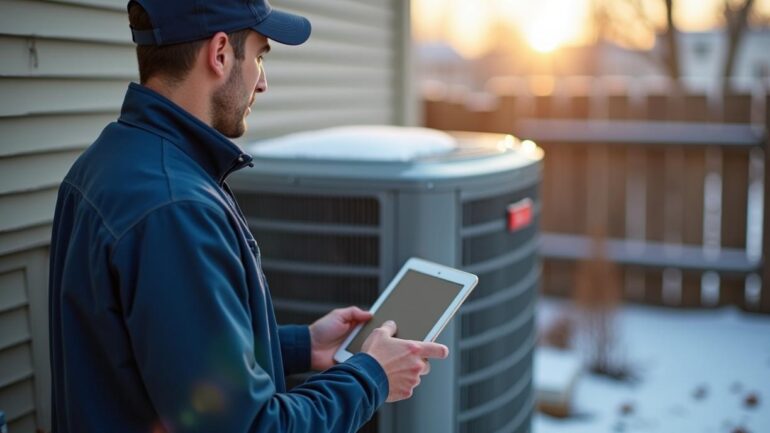
It’s easier to compare HVAC replacement financing options before cold weather. Waiting until the first hard freeze can leave you choosing from emergency availability instead of the best financing fit.
A replacement decision is not only about the furnace, heat pump, or air handler. It also involves credit terms, rebate deadlines, electrical capacity, duct condition, and whether your current system can safely run another heating season.
Why early fall is the best time to plan financing
Heating contractors often see demand rise sharply after the first stretch of nights below 40°F. That matters because a rushed replacement can limit equipment choices, especially for high-efficiency heat pumps, variable-speed furnaces, and systems that require electrical upgrades.
The U.S. Department of Energy says heat pumps can reduce electricity use for heating by about 50% compared with electric resistance heating such as baseboard heaters or furnaces. That performance difference becomes important before winter, when financing can be paired with incentives for qualifying equipment.
A typical residential HVAC replacement can require one to three days of installation, but permitting, load calculations, utility rebate review, and equipment ordering can add one to four weeks. If the replacement involves a panel upgrade, asbestos duct wrap, or new refrigerant line routing, the timeline can stretch further.
Know when replacement is smarter than repair
Age is the first filter. The National Association of Home Builders’ component life study puts air conditioners at 10 to 15 years, heat pumps around 16, and furnaces at 15 to 20, with actual lifespan depending on installation quality, maintenance, and intensity of use.
Efficiency is the second filter. A gas furnace with an AFUE rating of 80% sends about 20% of fuel energy up the flue, while a 95% AFUE condensing furnace wastes about 5%. For heat pumps, look at SEER2 for cooling and HSPF2 for heating; these newer federal ratings replaced older SEER and HSPF metrics in 2023.
If your system uses R-22 refrigerant, replacement usually deserves serious consideration. The U.S. Environmental Protection Agency phased out production and import of R-22 because it depletes ozone, so repairs involving refrigerant can be limited by availability.
Warning signs before heating season
Short cycling is a major red flag. A furnace or heat pump that starts and stops every few minutes may have airflow problems, oversized equipment, thermostat faults, or a failing control board.
Cold rooms can also point to duct issues rather than the main unit. ENERGY STAR states that typical duct systems can lose 20% to 30% of conditioned air through leaks, holes, and poor connections.
Cracked heat exchangers require immediate attention because they can allow combustion gases into the airstream. A technician can test for carbon monoxide, inspect flame rollout, and check static pressure against the manufacturer’s rated limits.
Main financing routes homeowners use
The right structure depends on whether you need speed, low monthly payments, rebate coordination, or home-equity-style terms. Some financing products are unsecured, while others attach to the property or use your home as collateral.
| Financing route | Best fit | Typical term | Key condition |
|---|---|---|---|
| Contractor financing | Fast replacement with one application | 12 months to 10 years | Read deferred-interest rules closely |
| Personal loan | No home equity or quick approval | 2 to 7 years | Fixed payment and fixed payoff date |
| Home equity loan or HELOC | Larger projects with ductwork or electrical work | 5 to 30 years | Requires enough equity and underwriting |
| Credit card promotion | Small balance you can repay quickly | 6 to 24 months | High interest may apply after promo |
| Utility or state energy loan | High-efficiency upgrade | 3 to 10 years | Equipment must meet program standards |
| Cash plus rebates | Lowest complexity | Immediate | Best when savings remain after payment |
Contractor financing
Many HVAC companies offer financing through third-party lenders. Approval can happen the same day, which helps when a heat exchanger fails or a compressor is beyond repair.
Look for whether a “0%” offer is truly no-interest or deferred-interest. With deferred interest, missing the payoff deadline can trigger retroactive interest from the purchase date.
Contractor financing can be useful when the installer helps coordinate equipment eligibility. For example, a qualifying cold-climate heat pump may need specific efficiency ratings listed by the Air-Conditioning, Heating, and Refrigeration Institute directory.
Personal loans and home equity
A personal loan can be cleaner than a promotional plan because the payoff date is fixed. Borrowers with strong credit often get faster approval, and the loan usually does not require a lien on the home.
Home equity financing may fit larger jobs, especially when replacement includes duct sealing, zoning, insulation, or a 200-amp electrical panel upgrade. The tradeoff is a longer approval process, often including income verification, property valuation, and closing documents.
A full HVAC replacement involving equipment and related upgrades often falls between $7,500 and $20,000, which is why loan term matters as much as the interest rate.
Matching the financing option to your situation
If your system still runs but is unreliable, start with three written estimates and ask each contractor for the Manual J load calculation assumptions. Manual J, published by the Air Conditioning Contractors of America, sizes equipment using insulation levels, window area, orientation, infiltration, and local design temperatures.
Choose contractor financing if the old unit is unsafe or failure is likely within weeks. This route works best when approval speed matters more than shopping multiple banks.
Choose a personal loan if you want a fixed monthly payment and do not want to use home equity. It also fits when the project is limited to equipment replacement, thermostat installation, and standard permit work.
Choose a home equity loan or HELOC if the project includes structural or efficiency improvements beyond the HVAC unit. Examples include replacing undersized ducts, adding return air pathways, or upgrading wiring for a heat pump with electric backup heat.
Choose a utility or state energy loan if your planned system meets the program’s efficiency threshold. Some programs require ENERGY STAR certification, AHRI matching numbers, or installation by a participating contractor.
Choose cash plus rebates if you can pay without draining emergency reserves. Keep at least three to six months of essential expenses available, especially before winter utility bills arrive.
Rebates, tax credits, and efficiency rules to check
Federal incentives can change, so verify current rules before signing. The IRS and ENERGY STAR maintain guidance on residential clean energy and efficient home improvement credits, including qualifying heat pumps, central air conditioners, furnaces, boilers, and electrical upgrades.
For many homeowners, incentives are tied to specific efficiency ratings. A heat pump may need to meet ENERGY STAR criteria for its region, and a furnace may need a high AFUE rating to qualify under a program.
Rebate timing matters. Utility rebates often require pre-approval before installation, while tax credits are usually claimed after the equipment is placed in service.
Keep the AHRI certificate, paid invoice, model numbers, permit record, and contractor license information. These documents can be required for utility rebates, tax filings, warranty registration, and future home sale disclosures.
Details to compare before signing any agreement
Read the financing agreement separately from the installation contract. The installation contract explains equipment, labor, permits, warranties, and scope; the financing agreement controls repayment, fees, default terms, and interest.
Ask whether the payment starts before or after installation. Some lenders begin the repayment clock at approval, not project completion.
Check if there is a prepayment penalty. Many consumer HVAC loans allow early payoff, but not all promotional plans handle extra payments the same way.
The equipment warranty also matters. Heat exchangers may carry longer limited warranties than compressors, blower motors, or control boards, and labor coverage is usually shorter than parts coverage.
For heat pumps in cold climates, ask for the rated heating capacity at 17°F. A unit that performs well at 47°F may need backup heat if output drops sharply during freezing weather.
Questions to ask the contractor and lender
Ask the contractor whether the replacement includes a Manual J load calculation, Manual S equipment selection, and Manual D duct evaluation when ducts are being changed. These ACCA standards reduce the risk of oversizing, noisy airflow, and poor humidity control.
Ask whether permits are included. Many jurisdictions require mechanical permits for furnace, air conditioner, or heat pump replacement, and gas furnace work may require combustion air and venting checks.
Ask the lender for the annual percentage rate, total repayment amount, late fee, promotional expiration date, and whether interest is deferred. Get those numbers in writing before the equipment is ordered.
Ask the contractor how long the quoted equipment is reserved. During peak heating season, availability for specific tonnage, cabinet size, or cold-climate models can change within days.