Roofing contractor costs are easier to plan when separating urgent winter-prep work from spring upgrades. Cold weather exposes weak flashing, clogged drainage, worn sealant, and poor attic ventilation faster than a summer rainstorm.
Before winter, the goal is not always a full roof replacement. Often, it is targeted work that keeps water, ice, and wind from turning small defects into interior damage.
Start with an inspection before temperatures stay below freezing
A professional roof inspection is the most useful first line item because it identifies which work must happen before snow, ice, and freeze-thaw cycles arrive. The International Association of Certified Home Inspectors notes that asphalt shingles become more brittle in cold weather, which can make winter handling and repairs harder.
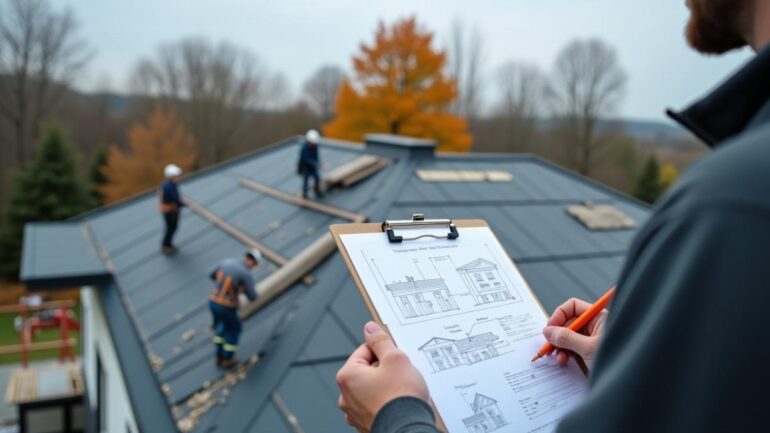
A pre-winter inspection should include shingles, flashing, pipe boots, valleys, gutters, attic ventilation, and visible decking from the attic. The inspector should also look for nail pops, cracked sealant, lifted tabs, rusted step flashing, and moisture stains around roof penetrations.
Expect a basic roof inspection to run about $150 to $400, depending on roof height, pitch, access, and whether attic access is included.
Ask for photos. A written report with labeled images helps you compare bids and avoid approving vague “winterization” packages.
Budget for small repairs before they become leak calls
Small roof defects matter more before winter because water can freeze in gaps and expand. The National Geographic Society describes the freeze-thaw cycle as water seeping into cracks, freezing, and expanding like a wedge that slowly widens the opening each time it repeats.
Common pre-winter repairs include replacing cracked pipe boots, resealing exposed fasteners, fixing lifted shingles, replacing missing ridge cap, and repairing loose flashing. These are not cosmetic items if they sit on wind-facing slopes or near valleys.
Shingles and ridge caps
Missing or damaged shingles should be repaired before sustained winds and snow loads arrive. Asphalt shingles are tested under ASTM D3161 or ASTM D7158 wind-resistance standards, but those ratings assume proper installation and intact seal strips.
If shingles have lost granules in patches wider than a dinner plate, the mat may be exposed. That area can absorb more moisture and age faster under freeze-thaw stress.
Flashing and penetrations
Most roof leaks begin at transitions, not in the middle of a field of shingles. Chimneys, skylights, sidewalls, plumbing vents, and exhaust vents all rely on flashing systems.
A cracked rubber pipe boot is especially common. Once the boot splits around the pipe, water can run down the pipe into the attic during wind-driven rain or melting snow.
For a bundle of minor repairs completed in one visit, many homeowners should budget $300 to $900, assuming no decking replacement is needed.
Decide whether gutters, ice protection, or ventilation belongs in the budget
Winter roof problems are often drainage problems. A roof that sheds water into clogged gutters can back water under the edge, soak fascia, and feed ice formation.
The International Residential Code requires ice barrier underlayment in areas with a history of ice dams. It must extend from the lowest roof edge to at least 24 inches inside the exterior wall line. That detail matters because the warm interior wall line is where melting snow often refreezes near the eave.
Gutters and downspouts
Gutters should slope about 1/4 inch for every 10 feet toward the downspout. Downspouts should discharge several feet away from the foundation, not directly beside the wall.
If you see tiger-striping on gutters, overflowing during moderate rain, or soil washout below the roof edge, drainage needs attention before snowmelt season.
Ice-dam risk
Ice dams form when roof snow melts over warm roof areas and refreezes at colder eaves. The U.S. Department of Energy says air sealing and insulation are key parts of reducing ice dams because heat escaping into the attic warms the roof deck.
If you have icicles wider than your wrist, interior ceiling stains near exterior walls, or past ice at the eaves, include ice-dam prevention in the conversation.
A combined gutter cleaning, minor adjustment, and downspout extension visit often lands around $150 to $500, depending on roofline length and access.
Compare repair, partial replacement, and full replacement
This is the main budgeting decision. The right choice depends on age, leak history, deck condition, and how localized the damage is.
| Option | Best fit | Watch for |
|---|---|---|
| Targeted repair | Roof is under 10 years old, damage is limited to one slope or penetration, and shingles still lie flat | Matching shingle color can be difficult after UV aging |
| Partial replacement | One roof plane has storm damage, heavy granule loss, or failed flashing, while other slopes remain sound | Valleys and transitions must be integrated correctly |
| Full replacement | Roof is near the end of service life, has widespread curling, repeated leaks, or soft decking | Winter scheduling may require temperature-specific installation methods |
Asphalt shingle roofs often last about 20 to 30 years, but lifespan depends on ventilation, slope, sun exposure, installation, and material grade. South-facing slopes commonly age faster because they receive more ultraviolet exposure and heat cycling.
A roof with two active leaks in different areas is different from one leak at a single vent boot. Multiple leak points often indicate system-wide aging or poor installation details.
Decking condition is another dividing line. If a contractor finds soft sheathing, delamination, or dark fungal staining in the attic, repairs should include the substrate, not just the visible shingles.
For a full asphalt shingle roof replacement, a typical planning range is $8,000 to $18,000 for many single-family homes, with roof size, slope, tear-off layers, decking repairs, and material grade driving the final number.
Ask about cold-weather installation limits
Cold weather does not automatically stop roofing, but it changes the process. Asphalt shingles use adhesive sealant strips that bond best when warmed by sun and suitable temperatures.
Many manufacturers require special handling when shingles are installed in cold weather, including hand-sealing in some conditions. Hand-sealing usually means adding approved roofing cement under shingle tabs so wind cannot lift them before the factory seal activates.
Fastening also becomes more critical. Nails must sit flush, not overdriven or angled. An overdriven nail can cut through the shingle mat, while a high nail may miss the intended fastening zone.
Contractors should store shingles flat and avoid dropping bundles in freezing temperatures. Brittle shingles can crack at corners or along cut lines.
If work is scheduled below 40°F, ask the contractor to state whether hand-sealing is included, which sealant will be used, and whether the manufacturer allows that method for the product being installed.
Cold-weather hand-sealing or extra handling may add $200 to $600 on smaller repair jobs, especially when steep slopes or many cut shingles are involved.
Include permits, disposal, and warranty details
Permits are easy to overlook because they are not visible on the roof. Many municipalities require a permit for roof replacement, and some require one for structural decking repair or changes to ventilation.
Disposal matters too. A tear-off can involve thousands of pounds of shingles. One square of roofing equals 100 square feet, and asphalt shingles commonly weigh about 200 to 350 pounds per square depending on product type and number of layers.
Ask whether the bid includes tear-off, dumpster, magnetic nail cleanup, starter strip, drip edge, ridge vent, flashing replacement, and ice barrier where required. “Install new shingles” is not a complete scope.
Warranty language should distinguish workmanship from manufacturer coverage. Manufacturer warranties often cover product defects, while workmanship warranties cover installation errors such as poor flashing, incorrect nailing, or inadequate sealing.
Permit and disposal charges commonly add $500 to $1,500 to a replacement budget, depending on local fees, number of layers removed, and landfill or transfer-station pricing.
Prioritize the work if the whole list is too much
If the budget is tight, rank items by leak risk and winter exposure. Active leaks, failed flashing, missing shingles, and clogged drainage should come before cosmetic staining or optional upgrades.
Choose targeted repairs when the roof is younger than 10 years, damage is isolated, attic decking is dry, and the contractor can identify one clear failure point. Choose partial replacement when one slope has heavy wear, hail damage, or repeated repairs but the other planes remain serviceable.
Choose full replacement when shingles are curling across several slopes, granule loss exposes the mat, decking feels soft, or the roof has reached the last quarter of its expected service life. A 22-year-old three-tab asphalt roof with recurring leaks should not be budgeted like a 7-year-old architectural shingle roof with one cracked boot.
Schedule urgent repairs before the first hard freeze if possible. Sealants, adhesives, and shingles are easier to work with in moderate temperatures, and contractors usually have tighter calendars after the first major storm.